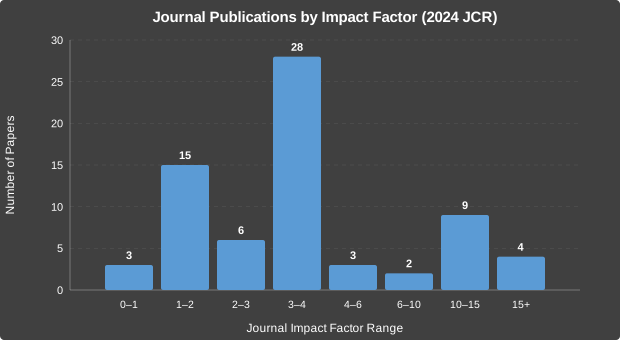
I welcome inquiries from prospective Ph.D. and M.S. students with strong backgrounds in signal processing, machine learning, computer vision, or optics. My group works on problems that combine mathematical rigor with physical systems and real-world applications — students who enjoy both analysis and building things tend to thrive here. Please send a CV and a brief description of your research interests to dllau@uky.edu. Thrust 1: Graph & Hypergraph Machine Learning
Since 2018, a major and rapidly growing part of my research has addressed signal processing and machine learning on graphs and hypergraphs — mathematical structures that model complex, non-pairwise relationships in sensor networks, social systems, biological data, and physical simulations. This work generalizes classical signal processing concepts — sampling, filtering, reconstruction — and modern deep learning architectures to these irregular domains. The conceptual bridge from my halftoning work to graph signal processing is direct: the blue-noise sampling theory that produces visually optimal dot patterns in printing can be generalized to produce optimal sampling strategies on arbitrary graph topologies. My group introduced this connection formally in:
- A. Parada-Mayorga, D. L. Lau, J. H. Giraldo, and G. R. Arce, "Blue-Noise Sampling on Graphs," IEEE Transactions on Signal and Information Processing over Networks, vol. 5, no. 3, 2019.
- D. L. Lau, G. R. Arce, A. Parada-Mayorga, D. Dapena, K. Pena-Pena, "Blue-Noise Sampling of Graph and Multigraph Signals: Dithering on Non-Euclidean Domains," IEEE Signal Processing Magazine, vol. 37, no. 6, 2020. (Invited tutorial)
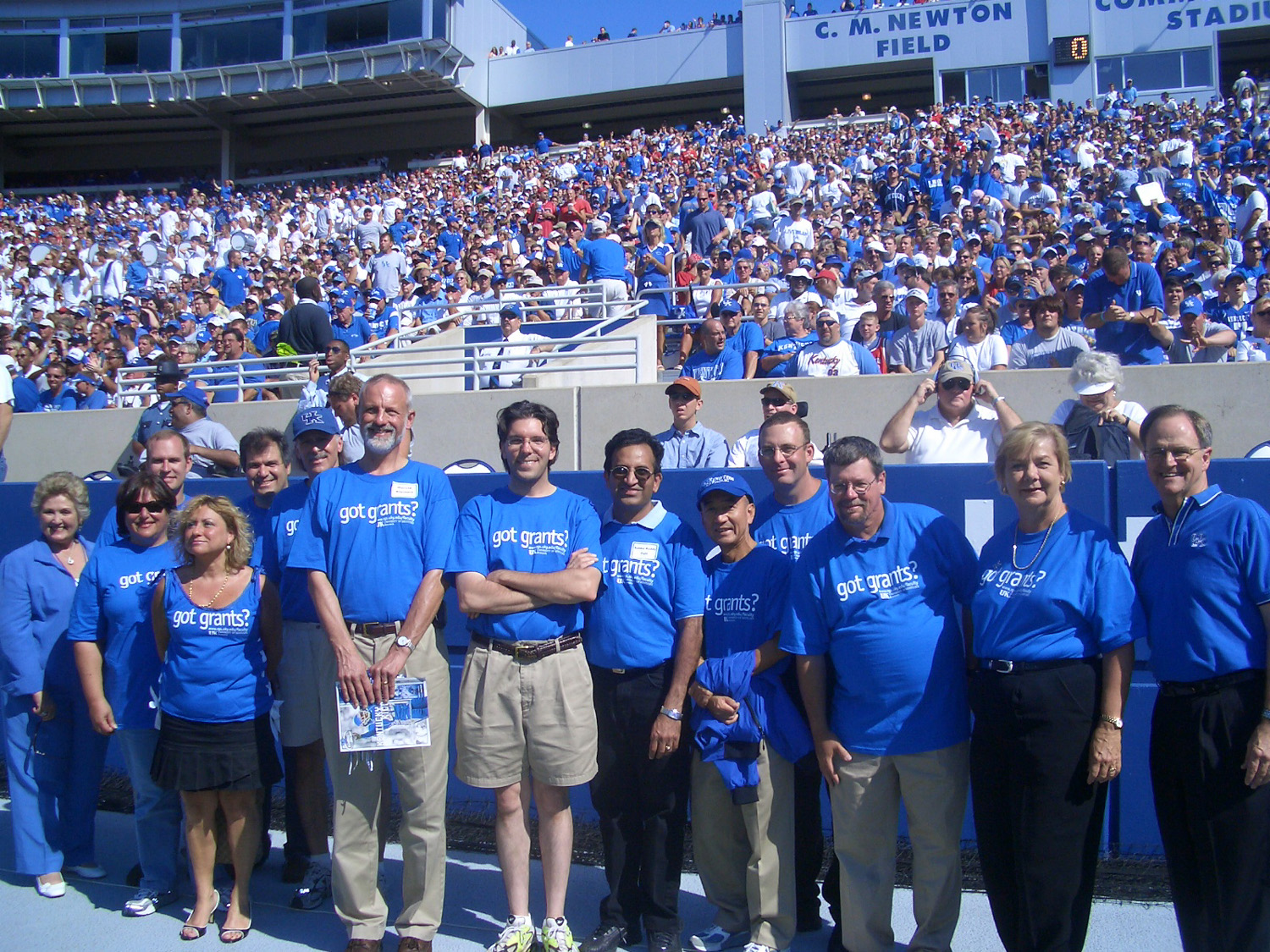 Honored at a UK football halftime ceremony for research funding achievements.
- K. Pena-Pena, D. L. Lau, and G. R. Arce, "t-HGSP: Hypergraph Signal Processing Using t-Product Tensor Decompositions," IEEE Transactions on Signal and Information Processing over Networks, vol. 9, 2023.
- K. Pena-Pena, L. Taipe, F. Wang, D. L. Lau, and G. R. Arce, "Learning Hypergraphs Tensor Representations From Data via t-HGSP," IEEE Transactions on Signal and Information Processing over Networks, vol. 10, 2024.
- B. T. Brown, H. Zhang, D. L. Lau, and G. R. Arce, "Scalable Hypergraph Structure Learning with Diverse Smoothness Priors," IEEE Transactions on Signal and Information Processing over Networks, vol. 11, 2025.
- F. Wang, K. Pena-Pena, D. L. Lau, and G. R. Arce, "T-HyperGNNs: Hypergraph Neural Networks via Tensor Representations," IEEE Transactions on Neural Networks and Learning Systems, vol. 36, no. 3, 2025.
- D. Dapena, D. L. Lau, and G. R. Arce, "Parallel Graph Signal Processing: Sampling and Reconstruction," IEEE Transactions on Signal and Information Processing over Networks, vol. 9, 2023.
- NSF CIF: Small — Collaborative Research: Hypergraph Signal Processing and Networks via t-Product Decompositions ($600K, 2023–2026, with Prof. Arce, University of Delaware)
- AFOSR DEPSCOR — Learning Multilayer and Hypergraph Networks from Data ($599K, 2022–2025, with Prof. Arce, University of Delaware)
Structured light 3D imaging — the science of recovering precise surface geometry by projecting coded light patterns onto a scene and analyzing the deformed patterns with a synchronized camera — has been the central thread of my research since 2002. My group has contributed to every layer of this pipeline: pattern design, projector and camera calibration, phase unwrapping, real-time point cloud reconstruction, multi-path artifact correction, and spatial augmented reality display. My first major structured light program was launched with NASA STTR funding for real-time single-pattern structured light, followed by a project with Laurence Hassebrook for the NIJ Fast Fingerprint Capture Program — one of only four teams selected nationally and only the second academic team, alongside Carnegie Mellon University — to develop a high-speed, non-contact fingerprint scanner capable of capturing all five fingers in under 30 seconds. Funded through the National Institutes for Hometown Security ($988K), this work produced the spin-off company FlashScan3D, which subsequently received a Phase III grant from the Department of Homeland Security and a separate grant from the U.S. Army Criminal Investigation Laboratory to develop a scanner for 3D ballistic imaging. The peer-reviewed output of this program includes:
- Y. Wang, L. G. Hassebrook, and D. L. Lau, "Data Acquisition and Processing of 3-D Fingerprints," IEEE Transactions on Information Forensics and Security, vol. 5, no. 4, 2010. (122 citations)
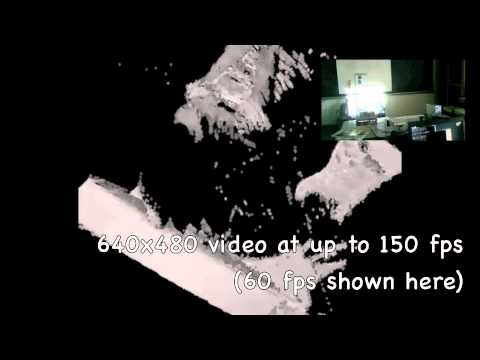
- K. Liu, Y. Wang, D. L. Lau, Q. Hao, and L. G. Hassebrook, "Dual-frequency pattern scheme for high-speed 3-D shape measurement," Optics Express, vol. 18, no. 5, 2010. (460+ citations)
- Y. Wang, K. Liu, Q. Hao, X. Wang, D. L. Lau, and L. G. Hassebrook, "Robust Active Stereo Vision Using Kullback-Leibler Divergence," IEEE Transactions on Pattern Analysis and Machine Intelligence, 2012.
- K. Liu, Y. Wang, D. L. Lau, Q. Hao, and L. G. Hassebrook, "Gamma Model and its Analysis for Phase Measuring Profilometry," JOSA A, vol. 27, no. 3, 2010. (250+ citations)
- D. L. Lau, K. Liu, and L. G. Hassebrook, "Real-Time Three-Dimensional Shape Measurement of Moving Objects without Edge Errors by Time-Synchronized Structured Illumination," Optics Letters, vol. 35, no. 14, 2010.
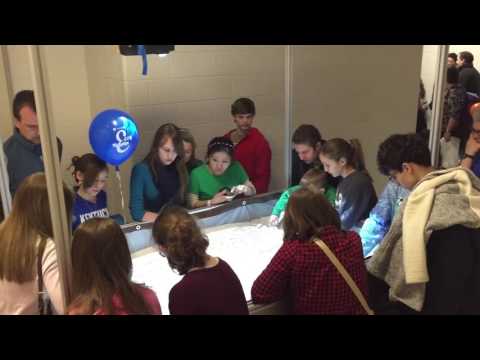
- Y. Zhang and D. L. Lau, "BimodalPS: Causes and Corrections for Bimodal Multi-Path in Phase-Shifting Structured Light Scanners," IEEE Transactions on Pattern Analysis and Machine Intelligence, 2024.
- Y. Zhang, D. L. Lau, and Y. Yu, "Causes and Corrections for Bimodal Multipath in Structured Light Scanning," CVPR, 2019.
- R. Gao, X. Zhao, D. L. Lau, et al., "One-shot structured light illumination based on shearlet transform," Optics Express, 2024.
Since 2015, my group has developed compressive sensing architectures for joint spectral and depth imaging — cameras that acquire hyperspectral and 3D range information simultaneously from a single sensor using coded apertures. The core insight is that by designing the aperture coding strategically — using blue-noise and graph-based priors developed in Thrust 1 — one can reconstruct full spectral cubes from far fewer measurements than conventional cameras require. Key contributions include the first snapshot compressive camera combining time-of-flight depth sensing with hyperspectral imaging, blue-noise coded aperture design for multispectral imaging, graph-based smoothness priors for spectral image reconstruction, and a new Sudoku multispectral filter array design:
- H. Rueda, C. Fu, D. L. Lau, and G. R. Arce, "Single Aperture Spectral+ToF Compressive Camera: Toward Hyperspectral+Depth Imagery," IEEE Journal of Selected Topics in Signal Processing, vol. 11, no. 7, 2017.
- H. Rueda-Chacon, J. F. Florez, D. L. Lau, and G. R. Arce, "Snapshot Compressive ToF+Spectral Imaging via Optimized Color-Coded Apertures," IEEE Transactions on Pattern Analysis and Machine Intelligence, vol. 42, no. 10, 2020.
- H. Zhang, X. Ma, D. L. Lau, J. Zhu, and G. R. Arce, "Compressive Spectral Imaging Based on Hexagonal Blue-Noise Coded Apertures," IEEE Transactions on Computational Imaging, vol. 6, 2020.
- J. F. Florez-Ospina, A. K. M. Alrushud, D. L. Lau, and G. R. Arce, "Block-based Spectral Image Reconstruction for Compressive Spectral Imaging Using Smoothness on Graphs," Optics Express, vol. 30, 2022.
- A. Aguirre, A. Alrushud, G. R. Arce, and D. L. Lau, "Sudoku Multispectral Filter Arrays for Spectral Snapshot Cameras," Optics Continuum, vol. 4, no. 9, 2025.
- NSF VEC Small Collaborative Research — Joint Compressive Spectral Imaging and 3D Range Sensing Using a Commodity Time-of-Flight Sensor ($860K, 2015–2019, with Prof. Arce and Intel Corporation)
- USDA/NIFA — Improving the Spatial and Spectral Calibration of Remote Sensing Imagery from Unmanned Aircraft Systems ($613K, 2023–2027, with Prof. Sama and Prof. Bailey, University of Kentucky)
- U.S. Department of Energy — Sensor Data Enabled Utility Asset Capacity Utilization Maximization, Load Modeling, and Event Detection ($1M, 2025–2027, with Prof. Liao, University of Kentucky)
 Chris Brown (left) with Mutoh executives during a visit to Tokyo, Japan.
- D. L. Lau, G. R. Arce, and N. C. Gallagher, "Green-Noise Digital Halftoning," Proceedings of the IEEE, vol. 86, no. 12, December 1998, pp. 2424–2444. (184 citations)
- D. L. Lau and G. R. Arce, Modern Digital Halftoning, Marcel Dekker, 2001; CRC Press, 2nd ed., 2008. (514 citations)
- D. L. Lau, R. Ulichney, and G. R. Arce, "Blue and Green-Noise Digital Halftoning," IEEE Signal Processing Magazine, vol. 20, no. 4, 2003.
- D. L. Lau and R. Ulichney, "Blue-Noise Halftoning for Hexagonal Grids," IEEE Transactions on Image Processing, vol. 15, no. 5, 2006.
- G. J. Garateguy, G. R. Arce, D. L. Lau, and O. P. Villareal, "QR Images: Optimized Image Embedding in QR Codes," IEEE Transactions on Image Processing, vol. 23, no. 7, July 2014. (151 citations)
- K. Pena-Pena, D. L. Lau, A. J. Arce, and G. R. Arce, "QRnet: Fast Learning-Based QR Code Image Embedding," Multimedia Tools and Applications, 2022.
- Q. Hu, D. L. Lau, R. K. Venugopal, and J. R. Heath, "FPGA-Based Hardware Implementation of Blue-Noise Stacked Error Diffusion Multitoning," IEEE Transactions on Circuits and Systems I: Regular Papers, 2025.
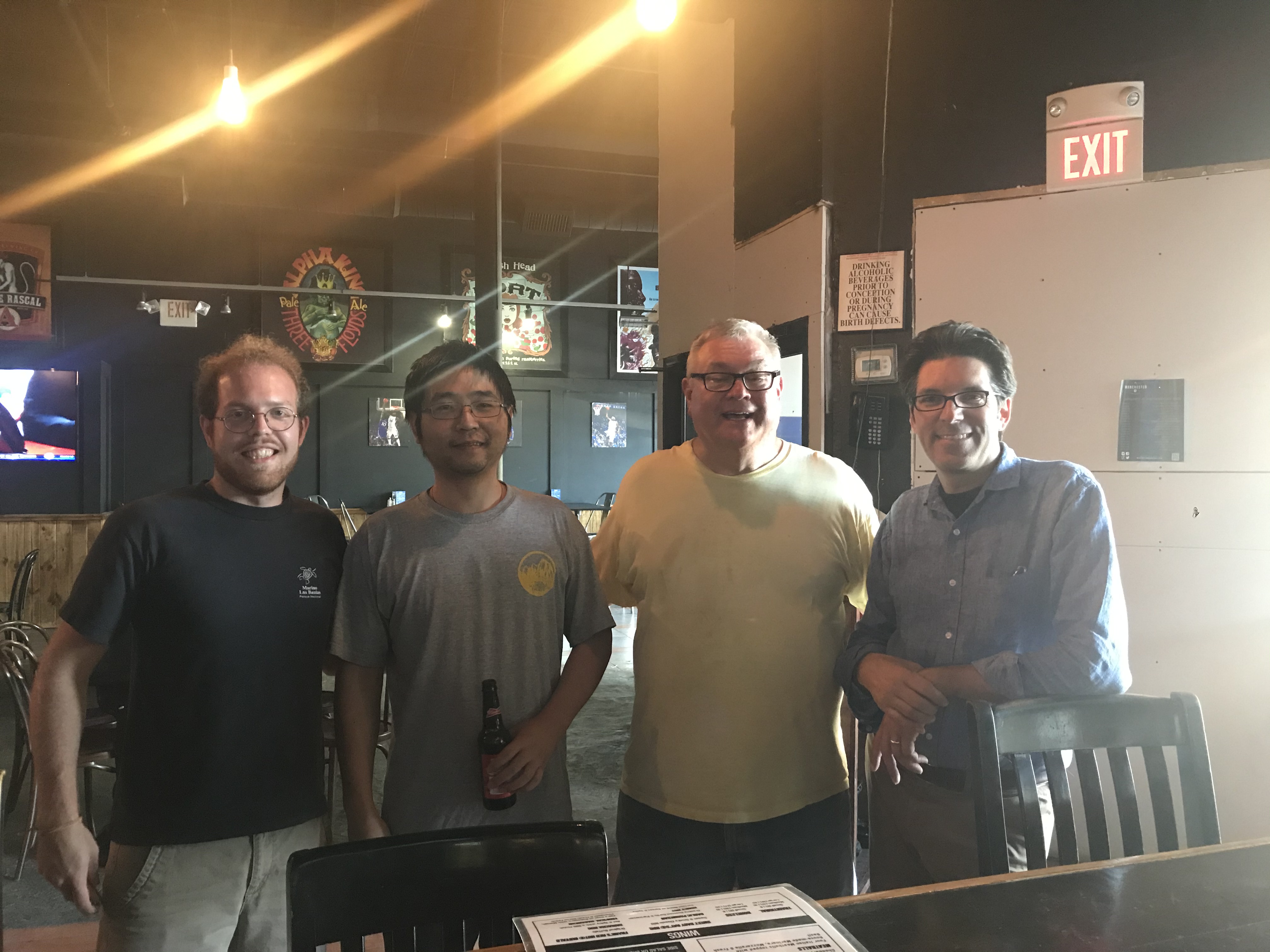 From left: M.S. student Matthew Ruffner, Ph.D. student Ying Yu, a fellow graduate student, and Dr. Lau.
Beyond the four primary thrusts, my group has pursued applied machine vision collaborations that draw on techniques from structured light, depth sensing, and computational imaging across a range of domains:
- In precision dairy farming, we developed 3D body condition scoring of dairy cows using depth cameras and automated feed intake measurement using volumetric 3D scanning (funded by KY Science and Technology Co., $50K; Journal of Dairy Science, 2016; International Journal of Agricultural and Biological Engineering, 2020).
- In plant phenotyping, we developed 3D root measurement systems for large plants using structured light and depth imaging (The Plant Phenome Journal, 2022; funded as part of USDA/NIFA work).
- In dental and facial imaging, we applied precision assessment of facial asymmetry using 3D imaging and AI (Journal of Clinical Medicine, 2025).
- In rail infrastructure, we performed quantitative 3D assessment of rail-highway grade crossing roughness (NURail Center, $296K; Journal of Transportation Safety and Security, 2016).
- In biomedical imaging, we developed pediatric vocal fold motion measurement using structured light laser projection (Journal of Voice, 2013); high-throughput drug discovery screening (NIH R01, $879K).
| Sponsor | Program | Amount | Period |
|---|---|---|---|
| NSF | CIF: Small — Hypergraph Signal Processing | $600K | 2023–2026 |
| AFOSR | DEPSCOR — Multilayer and Hypergraph Networks | $599K | 2022–2025 |
| USDA/NIFA | UAS Remote Sensing Calibration | $613K | 2023–2027 |
| U.S. Dept. of Energy | Utility Asset Load Modeling | $1.0M | 2025–2027 |
| NSF | VEC — Compressive Spectral + 3D Imaging | $860K | 2015–2019 |
| NSF | CIF: Small — Blue-Noise Graph Sampling | $500K | 2018–2021 |
| DHS / NIHS | 3D Fingerprint and Palm Print Scanner | $988K | 2009–2010 |
| NIH NCI | High-Throughput Drug Discovery Screening | $879K | 2008–2011 |
| DoD (USMC/USAF) | Anti-Sniper Infrared Targeting System | $2M+ (UK share) | 2004–2010 |
| NURail / Univ. of Illinois | Rail Crossing 3D Assessment | $296K | 2012–2016 |
| NSF | REU Site in ECE | $399K | 2006–2009 |
